
Lab News
The School of BioSciences has re-introduced Devi in a “Humans of BioSciences” post – have a gander and get some insight into the Professor!
Mia’s Manchester-based counterpart has arrived! Jianbo Xu will be in Melbourne for a year of his PhD candidature, expanding on his materials science knowledge, and learning developmental stages of beetles, and how these correlate to structural colour development.
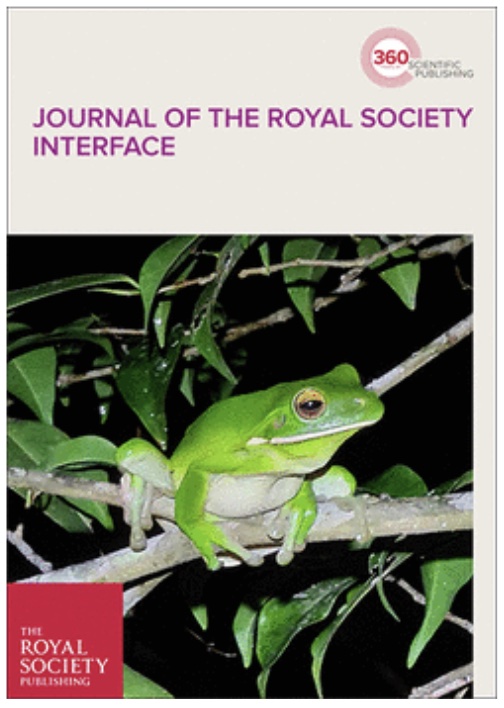 Our publication, Infrared camouflage in leaf-sitting frogs: a cautionary tale on adaptive convergence, made the cover of the journal! Devi’s photograph of a white-lipped tree frog, Nyctimystes infrafrenatus (formerly Litoria infrafrenata), which has high near-infrared reflectance, was used. Fabulous photo taken in the field.
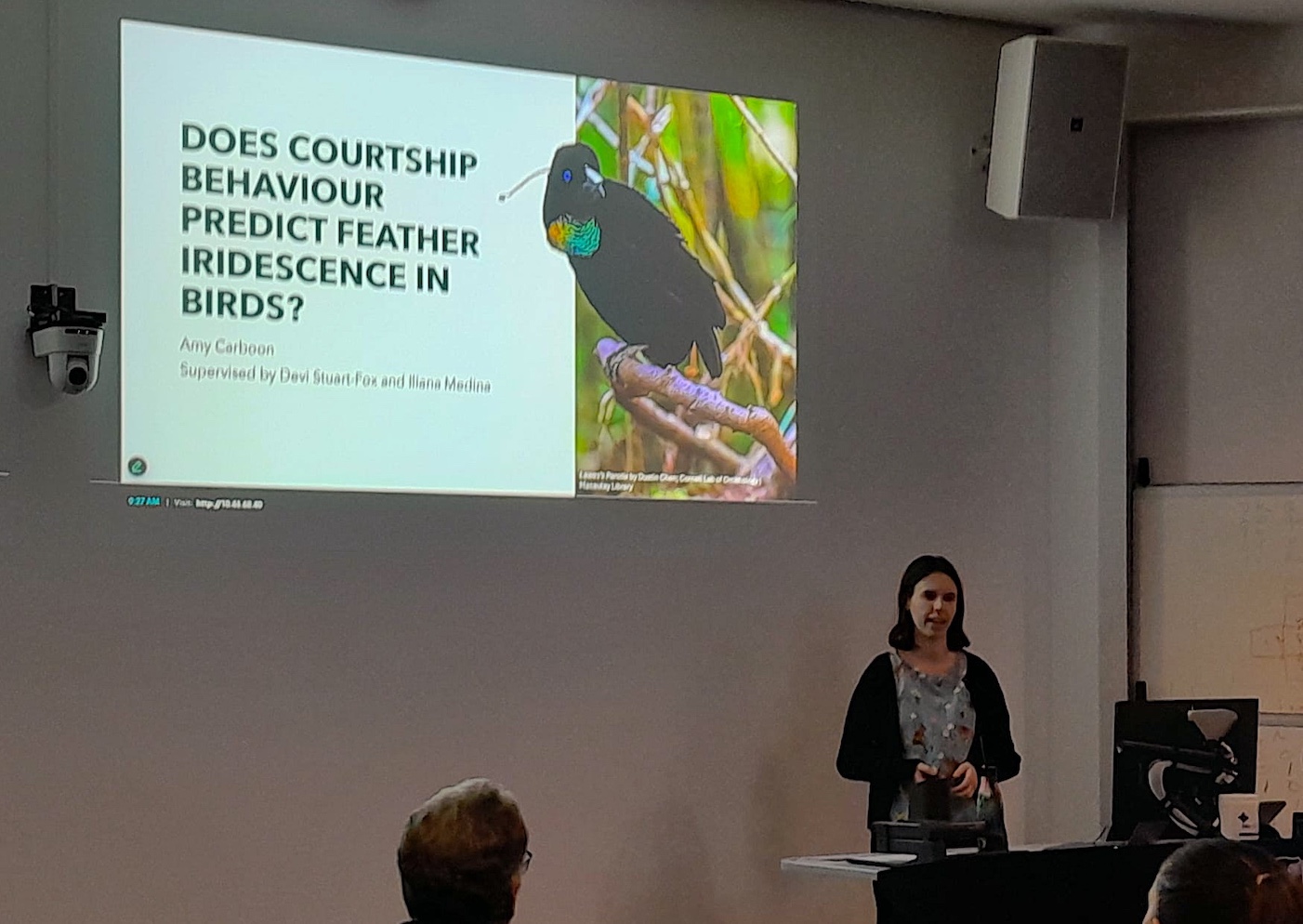 Amy successfully completed her MSc, examining how iridescent birds combine their dynamic colours with courtship behaviours to communicate reliably. Amy was co-supervised by Iliana and Devi. We’re going to miss her, but so excited to see where her career takes her, Amy is a phenomenal talent!
 The formidable fusion lab of Stuart-Fox, Medina and Franklin have snuck away for a weekend of productivity. Our seventh annual writing retreat is in picturesque Apollo Bay, where we encourage productivity through support and gentle peer-pressure to complete or make significant progress on proposals, manuscripts, theses, and any writing task that has fallen by the wayside in favour of more pressing deadlines. Unfortunately, not all of our students were able to attend this year, due to experiment scheduling conflicts, but they are sure to be just as productive!
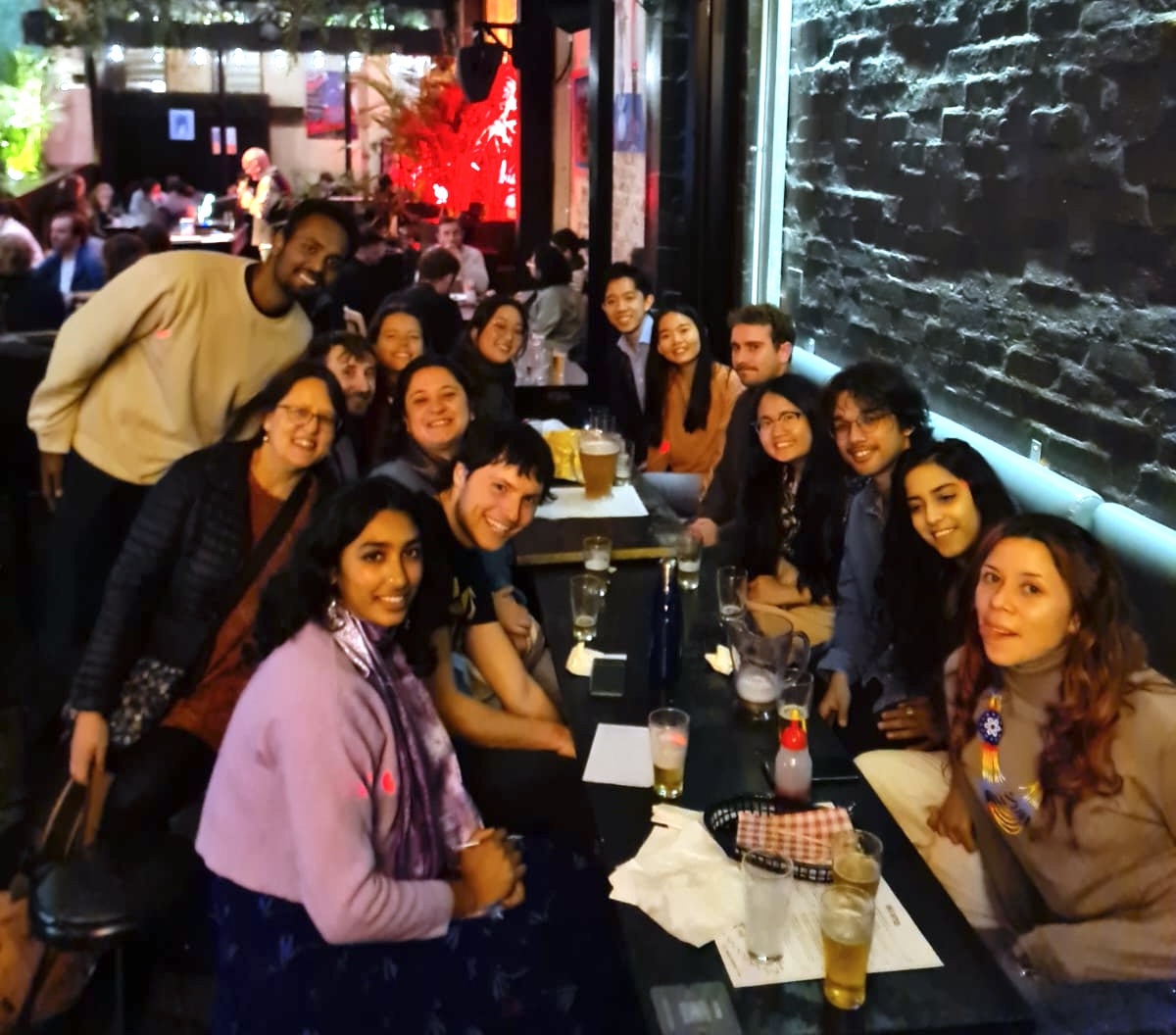 This week, we sadly farewell Sofia, after six fabulous and productive months with the lab. We’ve loved getting to know Sofia and are certain she will go on to complete a stunningly impressive PhD back in Brazil.
Lab alumni Zaza recently published her Honours research into honeybees’ perception of numbers, and whether they count from left to right, as many humans do! The team’s research was noticed by The Conversation, and wrote a broad interest article here – for the more hardcore scientists, read the original publication here. Congratulations, Zaza and co!
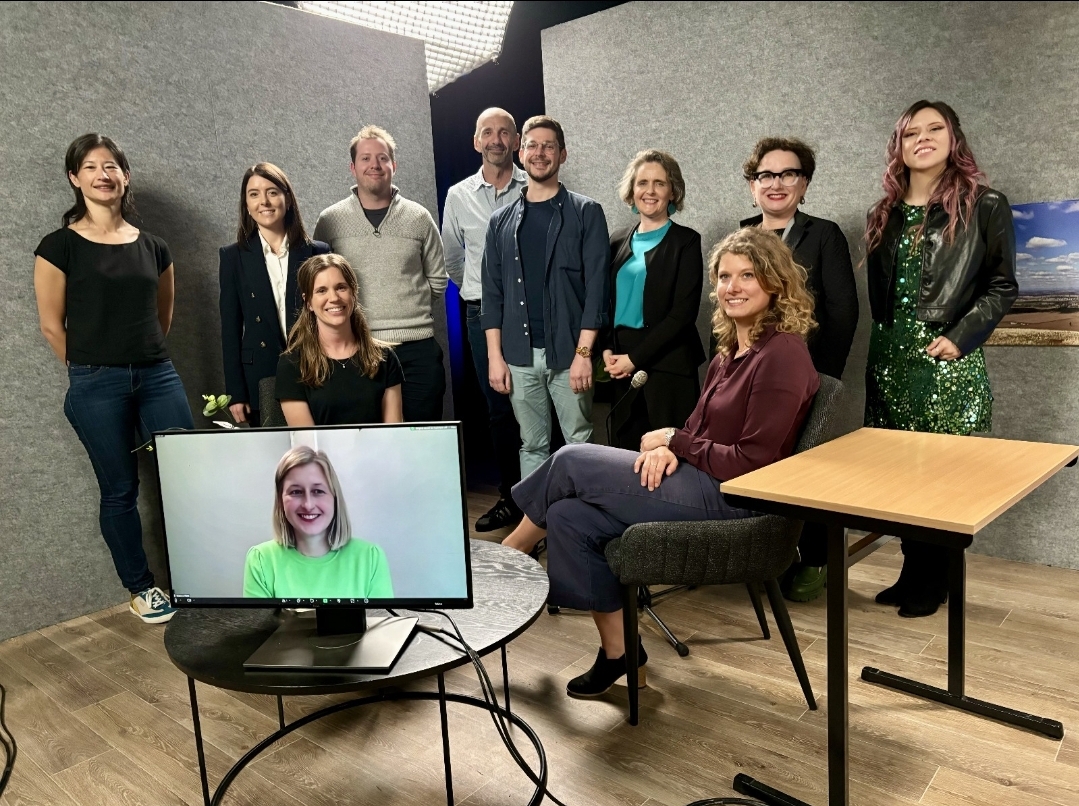 As last year’s Big Science Pitch winner, Laura was a member of the judging panel at this year’s Big Science Pitch, funded by the Native Animals Trust. Laura earned high praise from the Head of School, for her passion and beautiful articulation about how the Big Science Pitch has helped her.
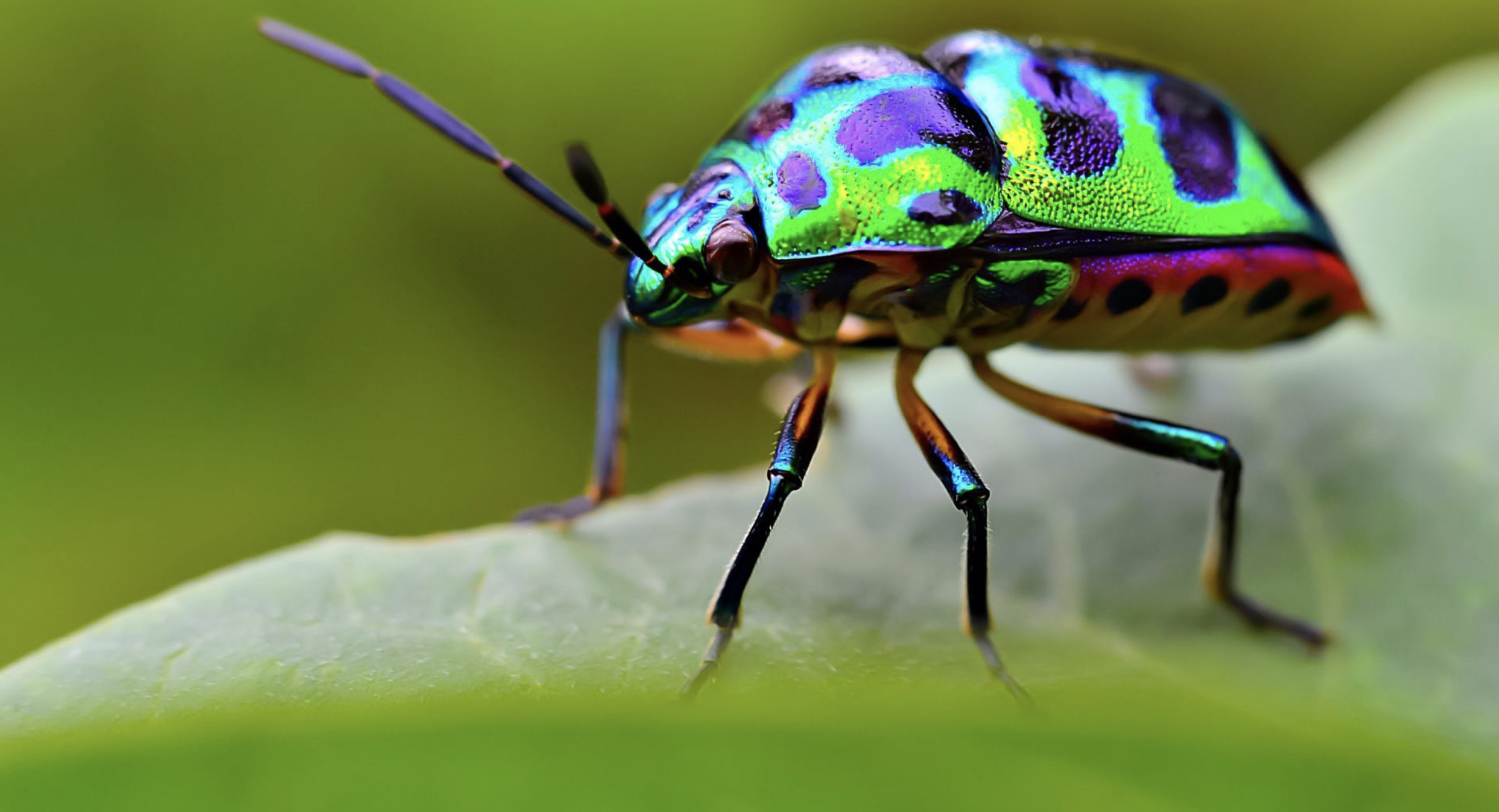 Communicating our research to a broader audience through accessible language is a responsibility we take seriously, and thoroughly enjoy. Amanda wrote this sensational article for the University’s Pursuit page, about how shininess may help insects confuse predators to avoid being eaten. The article features a gratuitously shirtless photo of Harry Styles, which Amanda assures us was the choice of the Pursuit editorial team. We believe her; Amanda’s a recent Swifty with sequins.
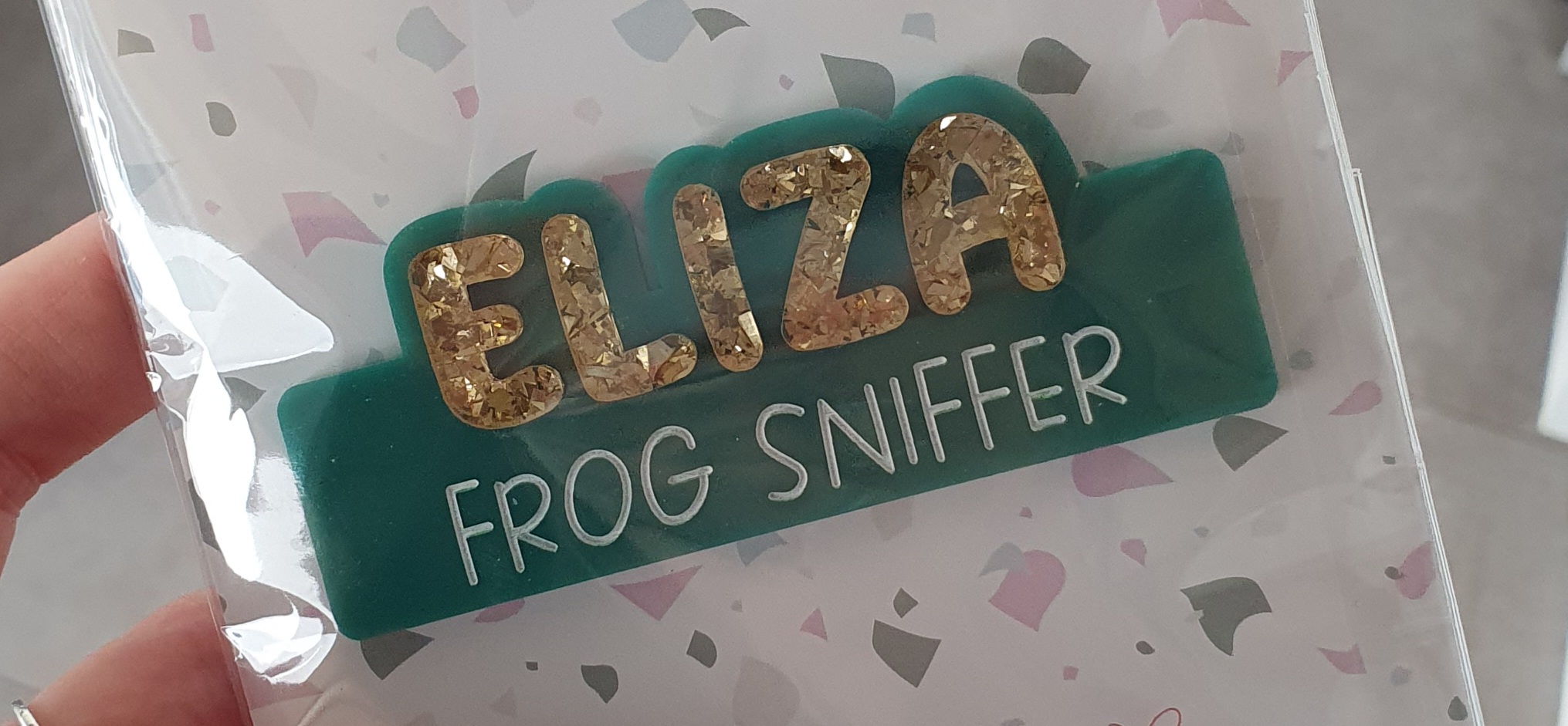 Resident frog sniffer Eliza Shiels completed her Masters on frog chemical communication; the species-specific odours that are released from a couple of endangered Australian frog species. Eliza is rapidly moving onward and upward, with an offer of an internship for her to carry on her research career! We are super proud of her!
Another completed PhD! Fabian Salgado Roa led his supervisors Devi and Iliana on an exploration of the evolution and consequences of colour polymorphism spiders; a phenomenal amount of work, with some impressive publications already! Congratulations!
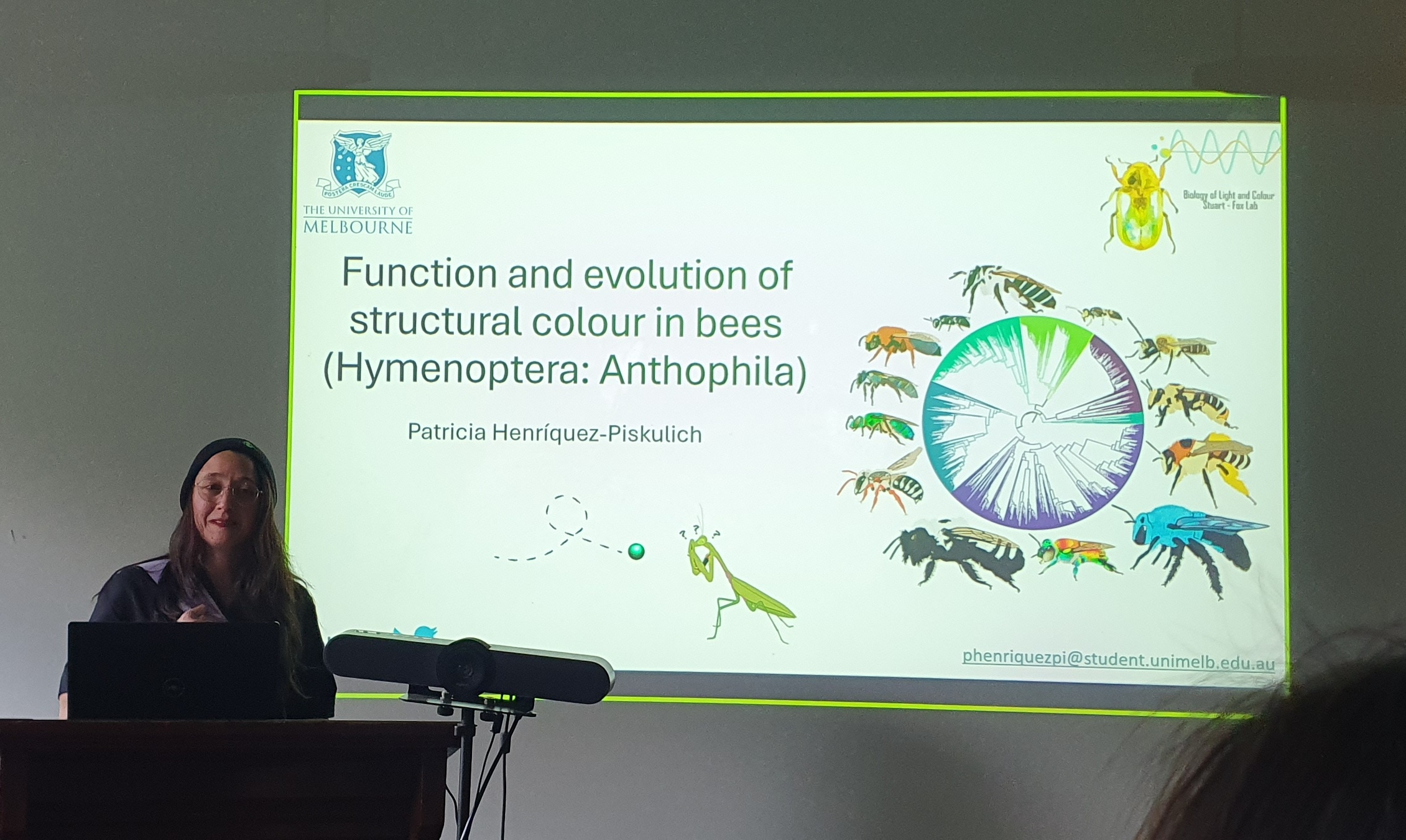
Huge congratulations to Patricia Henríquez Piskulich who completed her PhD, with a stunning breadth and depth of research exploring the evolution of structural colour in bees and how the optical effects produced by these underlying structures potentially influence predator success. An impressive legacy of Patricia’s PhD is the phylogeny of bees website. We are unbelievably proud of your accomplishments so far!
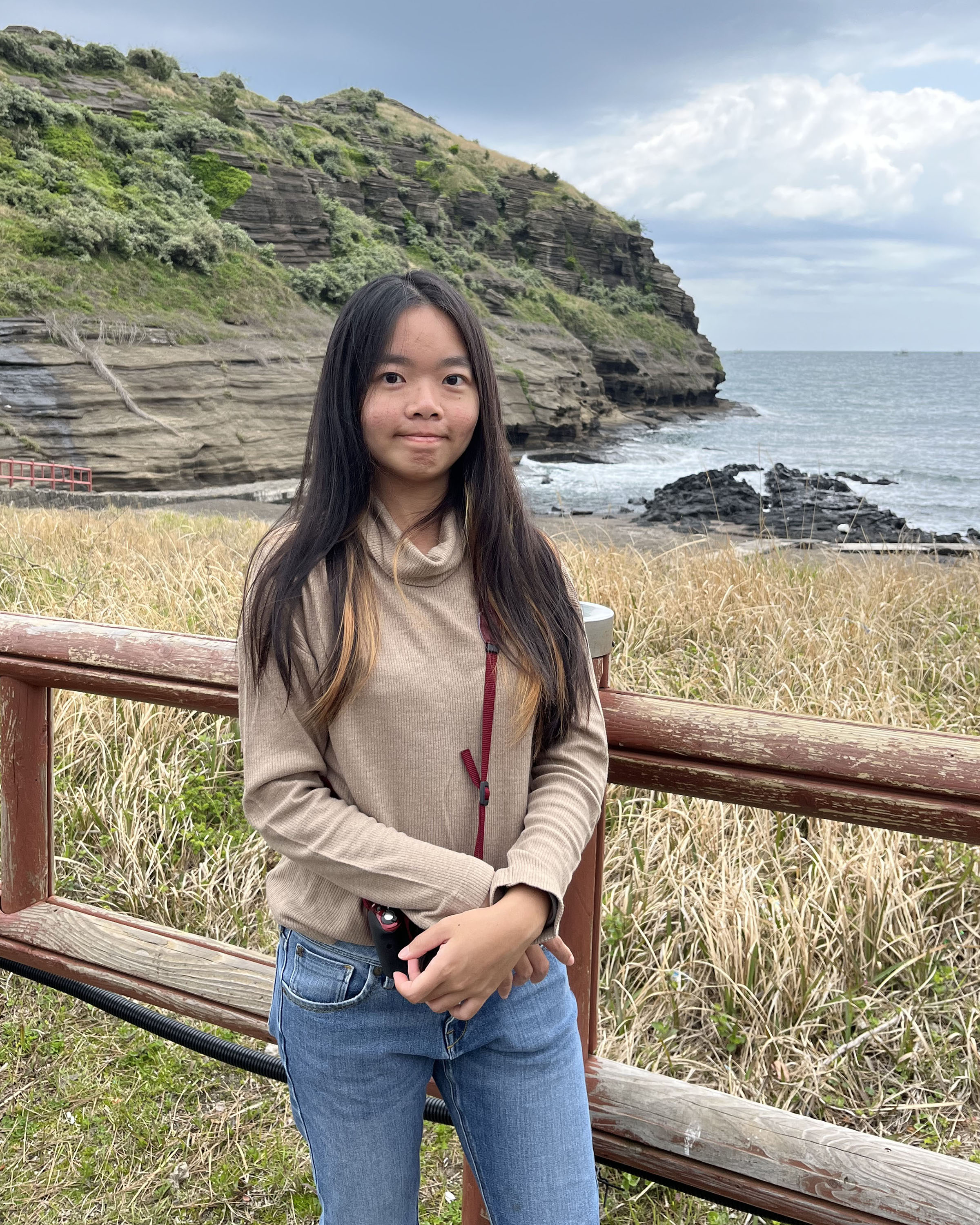 Min Tan from the National University of Singapore is joining the lab for the next six months. Her project aims to explore how animals camouflage themselves when moving through flicker fusion camouflage, which refers to the blurring of high contrasting patterns on an animal when it moves rapidly enough. She aims to conduct a comparative study to understand the effects of ecological factors influencing flicker fusion camouflage on the evolution of snakes possessing such patterns.
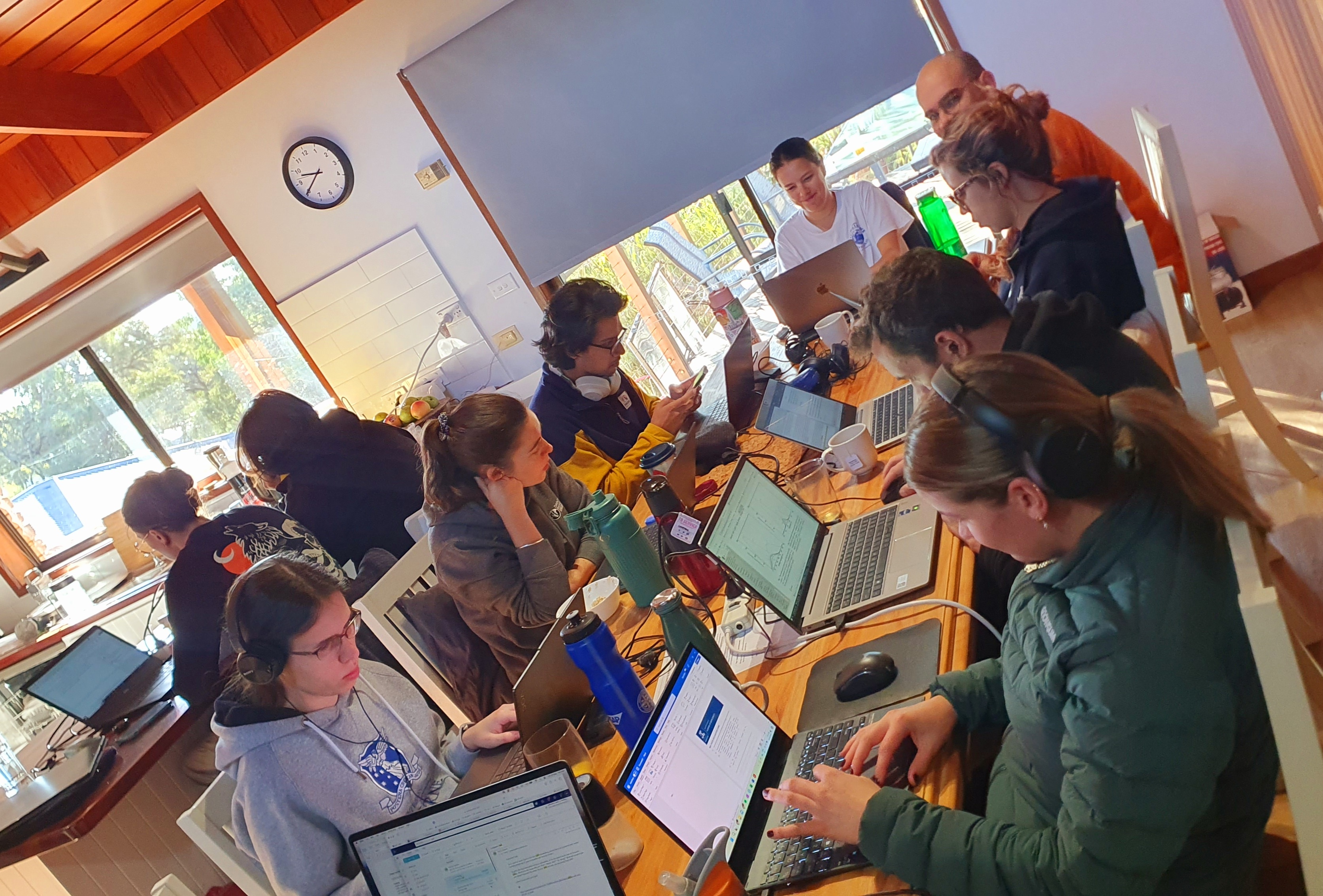 The joint Stuart-Fox, Medina and Franklin lab writing retreat was this year held in Anglesea, with a record 17 attendees. For the sixth consecutive year, the team encouraged productivity through support and gentle peer-pressure to complete or make significant progress on proposals, manuscripts, theses, and instructional guides. Other highlights include Kei-Lin taking out the highly anticipated airhockey tournament, Mia showing off her acrobatic skills on the trampoline and Eliza’s mildly unhinged recruitment of Manisha, Claire and Silvia to participate in an almost-winter ocean plunge!
Devi chatted to Olivia Henry on The Cosmos Podcast, on why animals come in different colours and patterns. Have a listen here!
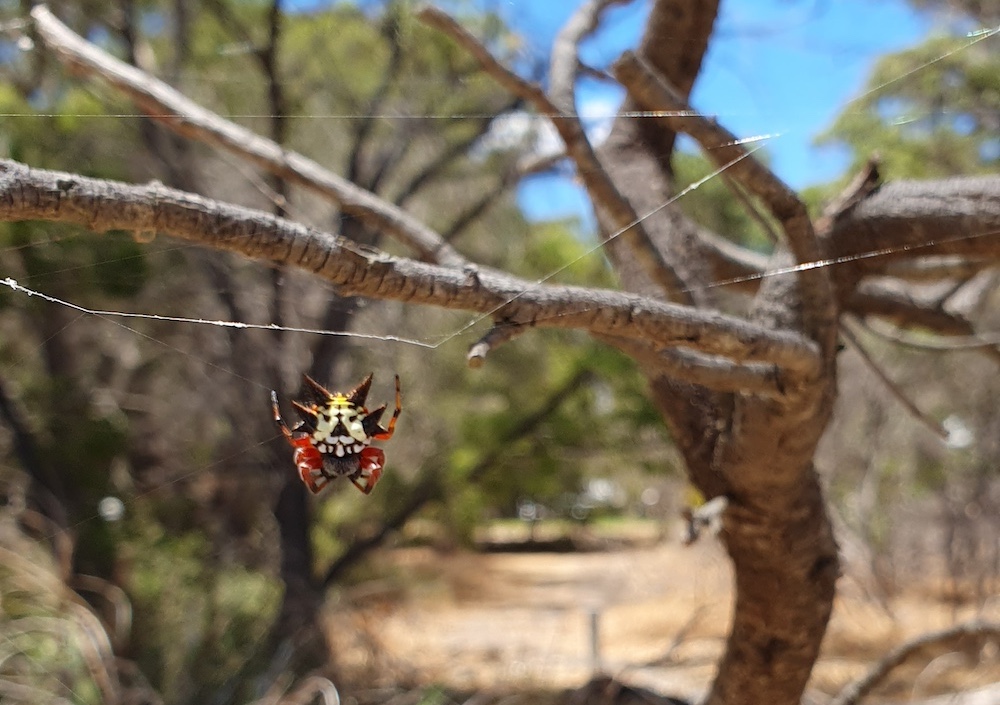 Lab tech Katrina has temporarily relocated to Perth, which Fabian took immediate advantage of, tasking her with finding eggs of his Christmas spiders for genetic analysis. Lovely little road trip south yielded a collection of eggs, and a mildly traumatising arch of webs at the site!
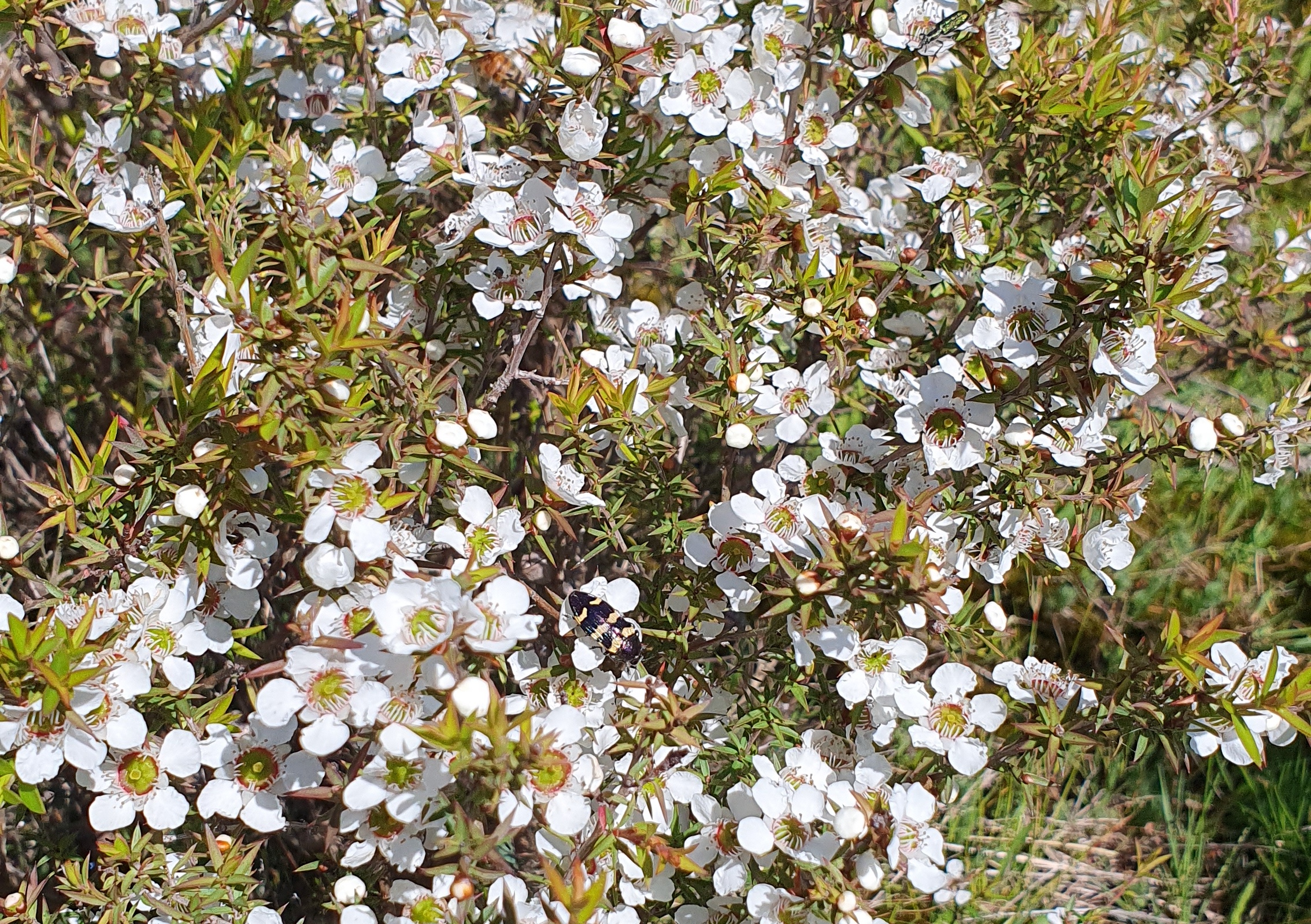 Jewel beetle season has arrived in Victoria, allowing new PhD student, Avichal to head to the field and transfer some of his arid lizard skills to his new study species! Avichal will be investigating micro-climates of jewel beetles and linking their optical properties to their capacity for thermoregulation. Early 2024 will see Avichal heading to Western Australia to continue to research! See if you can spot the beetle in the photo on the left!
Massive congratulations to postdoc Amanda on her successful DECRA proposal! Her project aims to address a fundamental biological question: what drives the extraordinary diversity of colours in nature? Using cutting-edge, interdisciplinary techniques, this project expects to link visual properties, movement and animal vision to discover functions of animal colouration, generating significant new insights for the fields of visual ecology, animal behaviour and camouflage. The outcomes of Amanda’s project include enhanced national and international collaboration and new tools for animal behaviour, perception and camouflage research. This work will benefit our understanding of vision, colour and the relationship between the two, with significant scope for bioinspired solutions to sensor and image processing problems.
In a most successful transition from student to lab postdoc Laura, immediately secured project funding by winning 2023’s Big Science Pitch! Info on the Big Science Pitch and the six finalists is here, with spotlight on Laura’s proposal here! Congratulations Laura, so excited to see how this project develops!
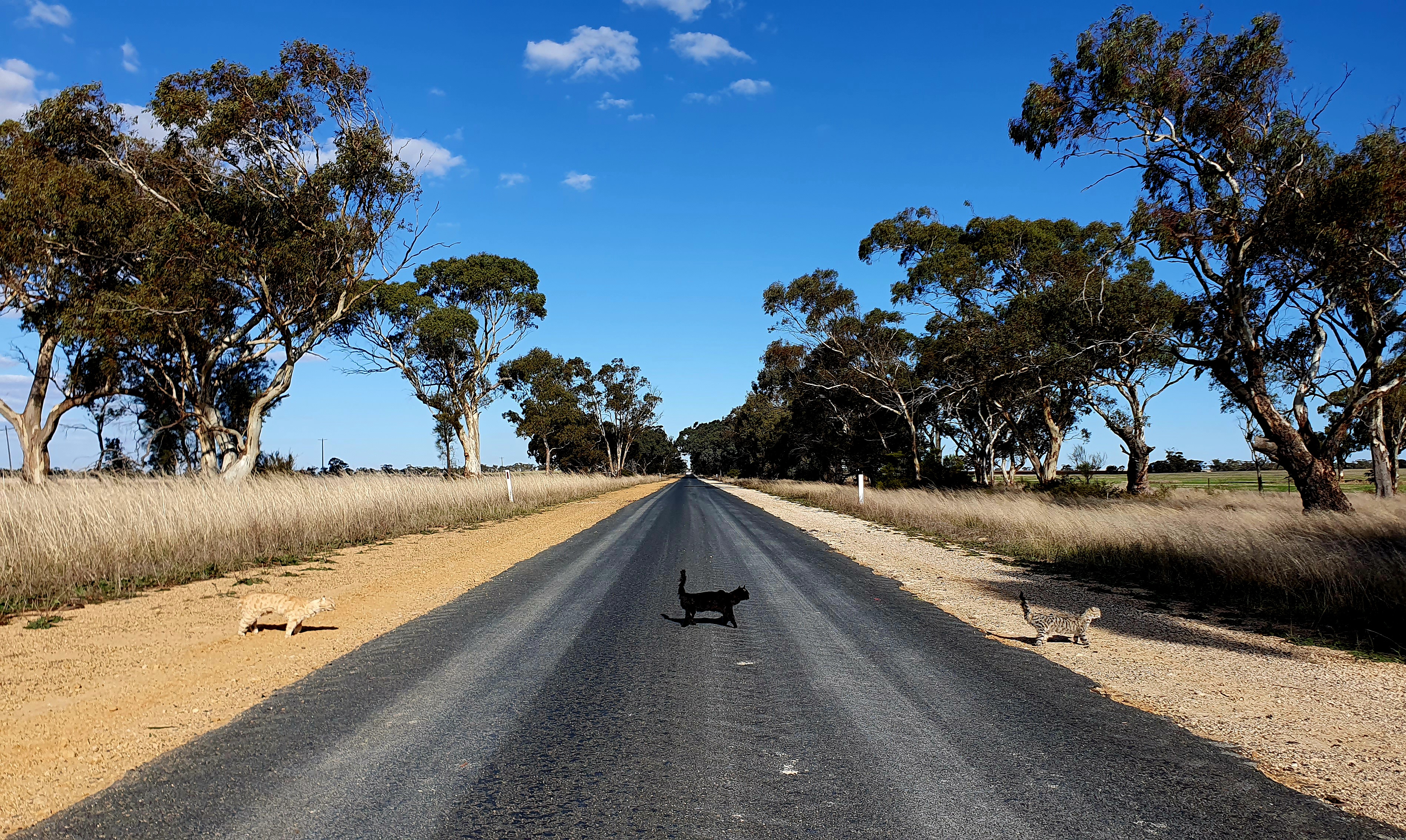 Maddy Shah Scott of Manchester University joined the lab for a semester-long undergraduate internship, during which she threw herself into lab life and a range of projects. Maddy contributed to a manuscript on near-infrared frogs, but her legacy will most certainly be the lab’s first foray into taxidermy! Maddy spent a stint at Arid Recovery in South Australia, where she dabbled in the very specific art of taxidermy-ing feral cats. The cats are to be photographed in a range of scenes, to investigate their camouflage and success as invasive species.
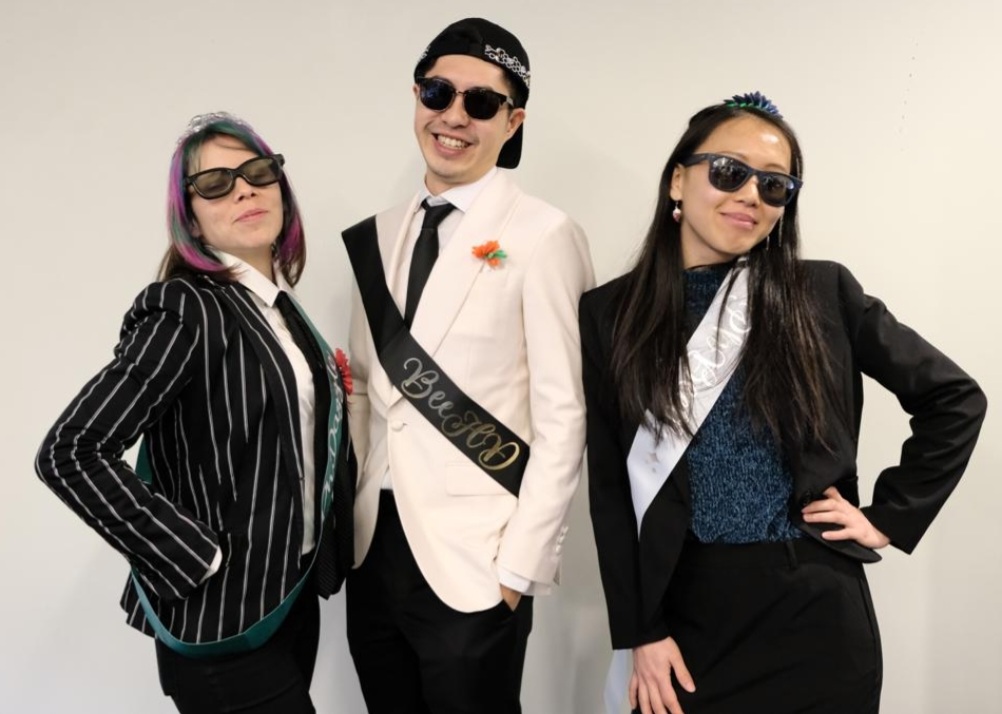 Triple threat and great friends, Leslie Ng, Laura Ospina-Rozo, and Luyi Wang completed their PhDs and graduated how they started – together! We are unbelievably proud of the researchers they have become, and the collaborations and outcomes they have produced during their candidatures. Congratulations, doctors!
Engaging in the Manchester-Melbourne exchange program, Laura visited the lab of Dr Ahu Gumrah Parry in Bristol to build relationships and exchange skills in materials. We then received the very lovely and beyond capable Hongning to further develop materials and methods!
We adopted third-year Bachelor of Science student, Jo Lyn Loo for her Science Research Project subject. Jo Lyn’s project looked into visitor effect on butterfly behaviour and microhabitat preferences at the Melbourne Zoo Butterfly House with the overall aim of improving the welfare of the butterflies. From this project and her previous experience working at the Penang Butterfly Farm (Entopia), Jo Lyn has developed an interest in and love of insects – especially butterflies! Jo Lyn has now completed her project with us, and her degree, majoring in Ecology and Evolutionary Biology. She has now moved on to a research assistant role at Nanyang Technological University in Singapore, working on forest and urban ecology, focusing on vegetation nutrient runoff.
 Stuart-Fox Lab | Devi Stuart-Fox
You must be logged in to post a comment.