
Western Australian jewel beetles 2024
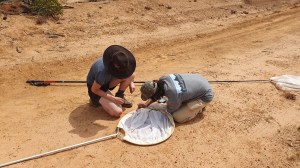
I had heard so much buzz about these giant, flashy Jewel beetles of WA from my labmates and supervisors that I was practically losing sleep before our expedition. Amanda and I kicked off our adventure in Perth, where our trusty collaborator showered us with suggestions about where these beetles might pop up. Now, for context, the adults of these Jewel beetles have a specific window when they emerge, forage, and breed. So, tracking them down involves a mix of educated guesses and stalking eucalyptus trees on iNaturalist. After a quick trip to the hardware store (a field biologist’s best mate), we hit the road for the Goldfields region of WA, speckled with patches of eucalyptus trees.
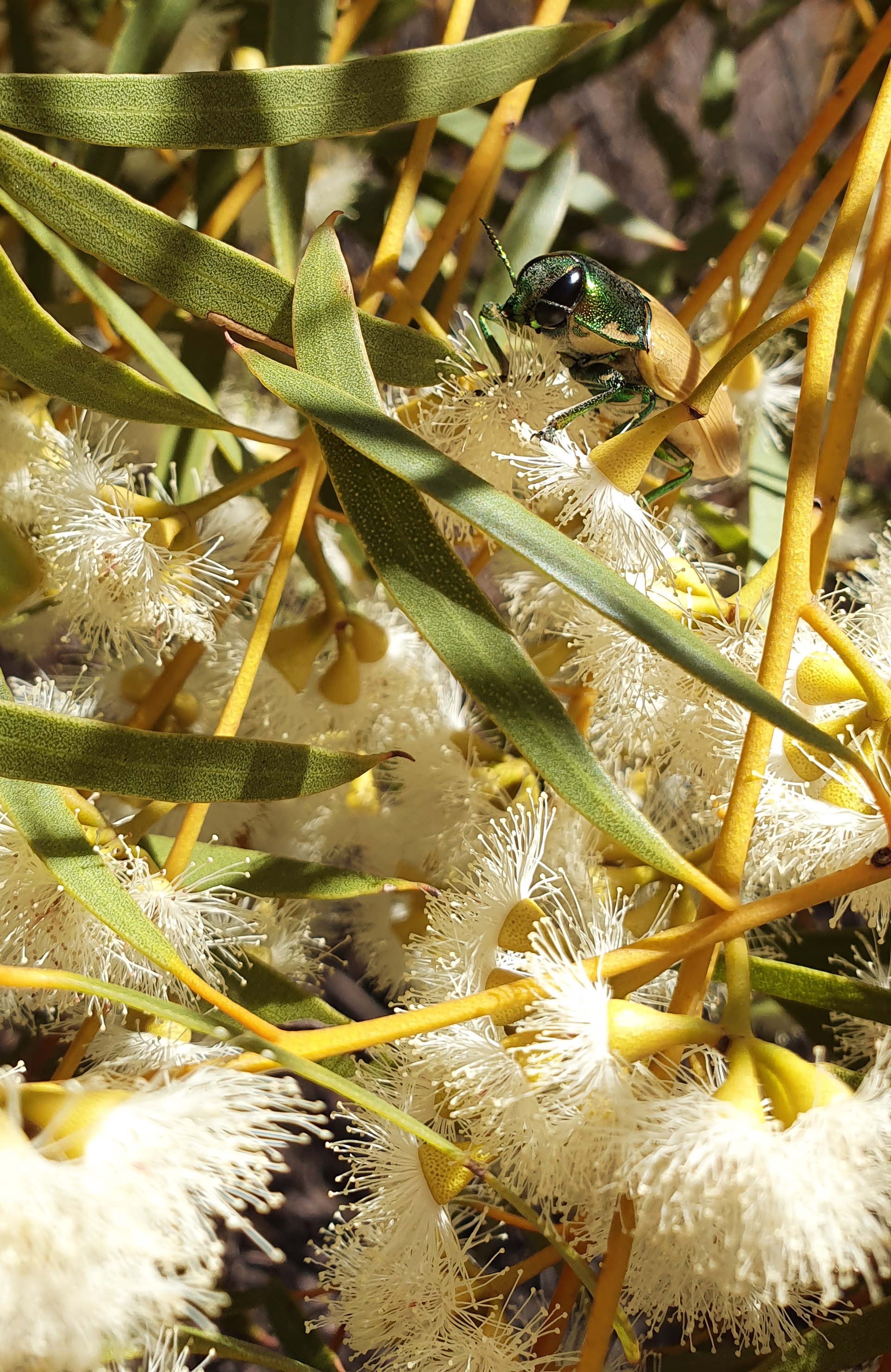 After a somewhat lacklustre initial scan, we decided to set up our tents in a quaint mining town called Southern Cross. The next morning, we were serenaded awake by the Red-tailed Black Cockatoos and Australian Ravens in the colossal eucalyptus tree beside our tents. Off we went from Southern Cross towards Kalgoorlie, hoping to stumble upon some blooming eucalyptus trees. Lo and behold, we found a few with a handful of beetles buzzing about some flowering eucalyptus tree near a rundown fuel station. With a swift shake, Amanda caught two individuals of Temognatha ducalis. After a crash course in beetle catching from her, I managed to catch a couple of Temognatha brukii, which were smaller and lighter in colour than Temognatha ducalis.
Over the next few days, we racked up around 15 species of jewel beetles. My personal favourites were the colossal Temognatha heros and the kaleidoscopic Temognatha murrayi. And while we were busy beetle hunting, we also caught sight of some giant robber flies swooping in to snack on them. In the final stretch of our trip, we found ourselves doing some serious beetle-watching, spending a solid 12 hours a day under the blazing outback sun. Suffice it to say, we ended up looking like lobsters, and our lovely lab technician Katrina developed a rather concerning obsession with mining trucks rumbling past our field site. All in all, despite the beetles playing hard to get this season, we managed to gather some solid data and witness some truly fascinating human (yes, human) and beetle antics. Now, fingers crossed that after crunching the numbers and lab work, we’ll unlock some juicy insights into which beetles are prone to reduced activity in the face of climate change.

Post by PhD student, Avichal Tatu
 Stuart-Fox Lab | Devi Stuart-Fox
You must be logged in to post a comment.