
Returning to our reptile roots

After a decade working together, the professor and I decided to test the relationship by hitting the road for our first fieldtrip together!
Devi ferried Manchester University undergraduate student Maddy to Arid Recovery in South Australia for her to undertake her field project investigating aspects of camouflage in feral cats. I flew to rendezvous with Devi at Whyalla and we were off, via a quick tourist stop at the Big Galah in Kimba, at my insistence.
We first headed to the middle parts of Nowhere, South Australia in search of the wee Diporiphora linga; the pink two-lined dragon, who seemingly enjoys swaying on blades of grasses, or basking on the hot sand. We encountered a delightful number of gravid females, which is fantastic to see for the next generation. The professor and I were both mildly apprehensive that our skills in dragon spotting and noosing may have tarnished in the intervening lab and beetle-based years, but our fears were entirely unfounded! We spotted and noosed the most wee of the dragons, and dubbed him “Dave,” immediately making him the tour mascot.
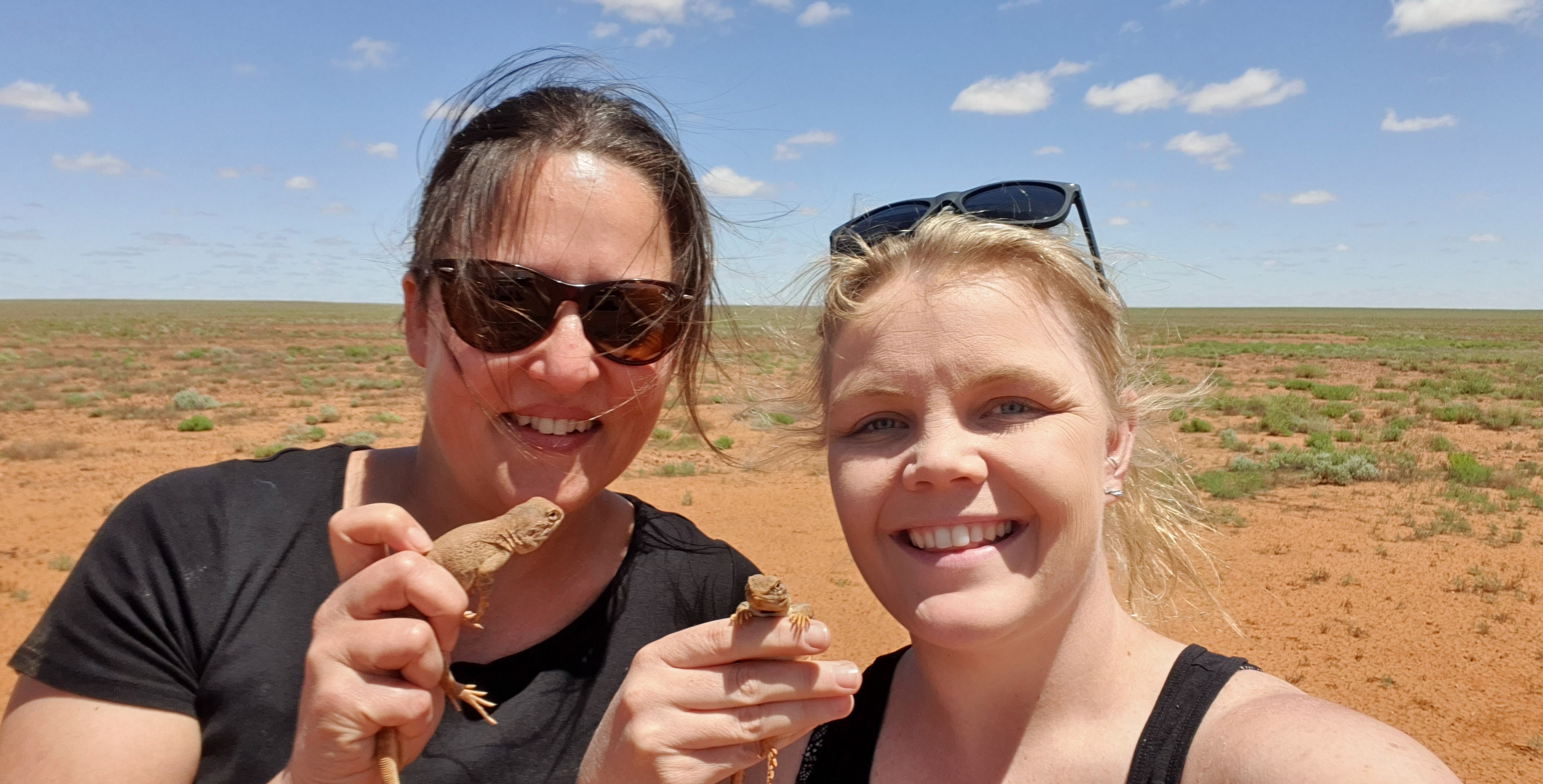 Following our D. linga success, we continued on along some of Australia’s most remote roads to locate the long-nosed water dragon (Gowidon longirostris), an entirely unpleasant beast with sharp teeth, strong jaw and propensity to bite. They were wonderfully easy to find at our chosen location, even affording us the opportunity to select the most colourful individuals.
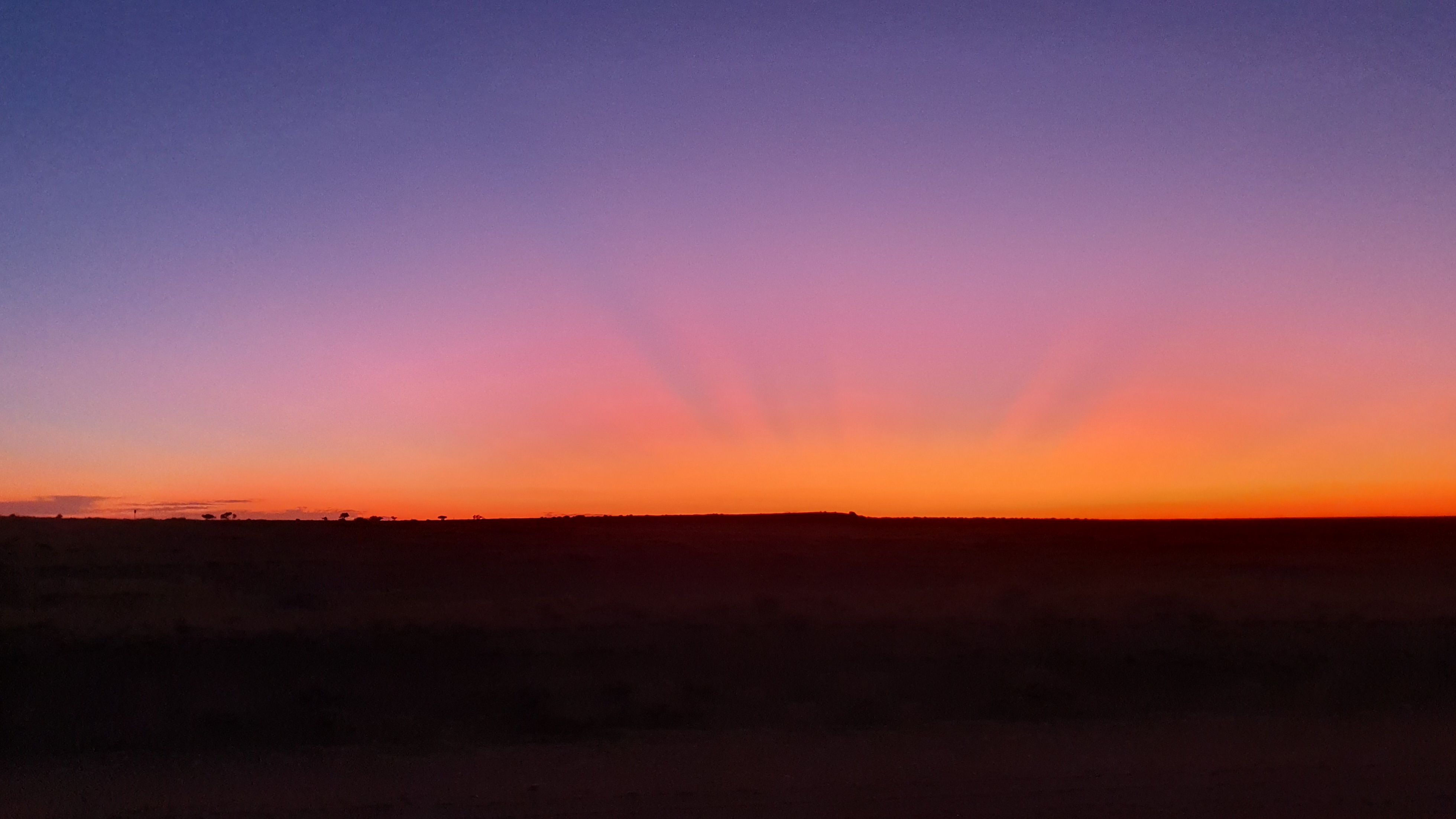
But it wasn’t all work; Devi and I got to play tourist in the opal mining town of Coober Pedy, which in addition to their famously functional underground dwellings, had some spectacular sunsets (see photo below!).
Due to an obligation of mine in Melbourne, Devi gleefully abandoned me in Coober Pedy to fly home (I may have played one too many Celine Dion ballads as roadtrip dj), while she drove back east to retrieve Maddy, and collect one final dragon species, the spectacular Ctenophorus vadnappa (red barred dragon).
The dragons captured on this trip will contribute to a Human Frontier Science Program funded research project on the mechanisms and development of skin colours in reptiles.
Post by Katrina
 Stuart-Fox Lab | Devi Stuart-Fox
You must be logged in to post a comment.