
Beetles, Bugs, and Bird Nests at the School of Biosciences Research Showcase 2026
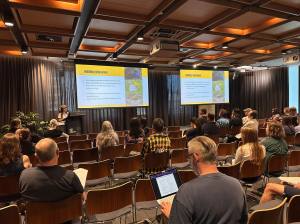
On 23 October 2026, we headed to campus; not to a meeting room for our weekly Friday morning lab catch-up, but to Melbourne Connect to attend the School of BioSciences Research Showcase 2026. Organised by representatives from the BioSciences Postgraduate Society (BioPS) and BioSciences Early Career Academics (BECA), the annual event is run as a mini day conference for postgraduate students, postdoctoral researchers, faculty, and any member of the school. This event is a great opportunity to learn about the ongoing research in other labs and departments, which we don’t often hear the nitty gritty details of over casual lunch breaks or coffee chats.
The day kicked off with an Acknowledgement of Country and address by Alex Idnurm, the acting Head of BioSciences, before diving straight into a thought-provoking plenary by Professor of Psychology Iroise Dumontheil on the topic, ‘From Counting on Fingers to Shopping Lists – How We Outsource Our Thinking’. Dr Dumontheil shared about how young children showed accelerated arithmetic abilities when taught to count on their fingers, and how similar methods can assist our brains with computing complex mental tasks. She ended with a caution that over-reliance on artificial intelligence powered by large language models may have detrimental effects on learning and cognition.
Following a quick morning tea break, it was time for a full day of talks! Each presenter had a nine-minute time slot: seven minutes to summarise their research and another two minutes for questions. It was a challenge but a great exercise in boiling down months of research into just the most pertinent points, delivered in a little over five minutes. From our lab, Laura, Chenyue, Alexis, and Iain worked hard all week on their presentations, and finally it was time for the day of reckoning!
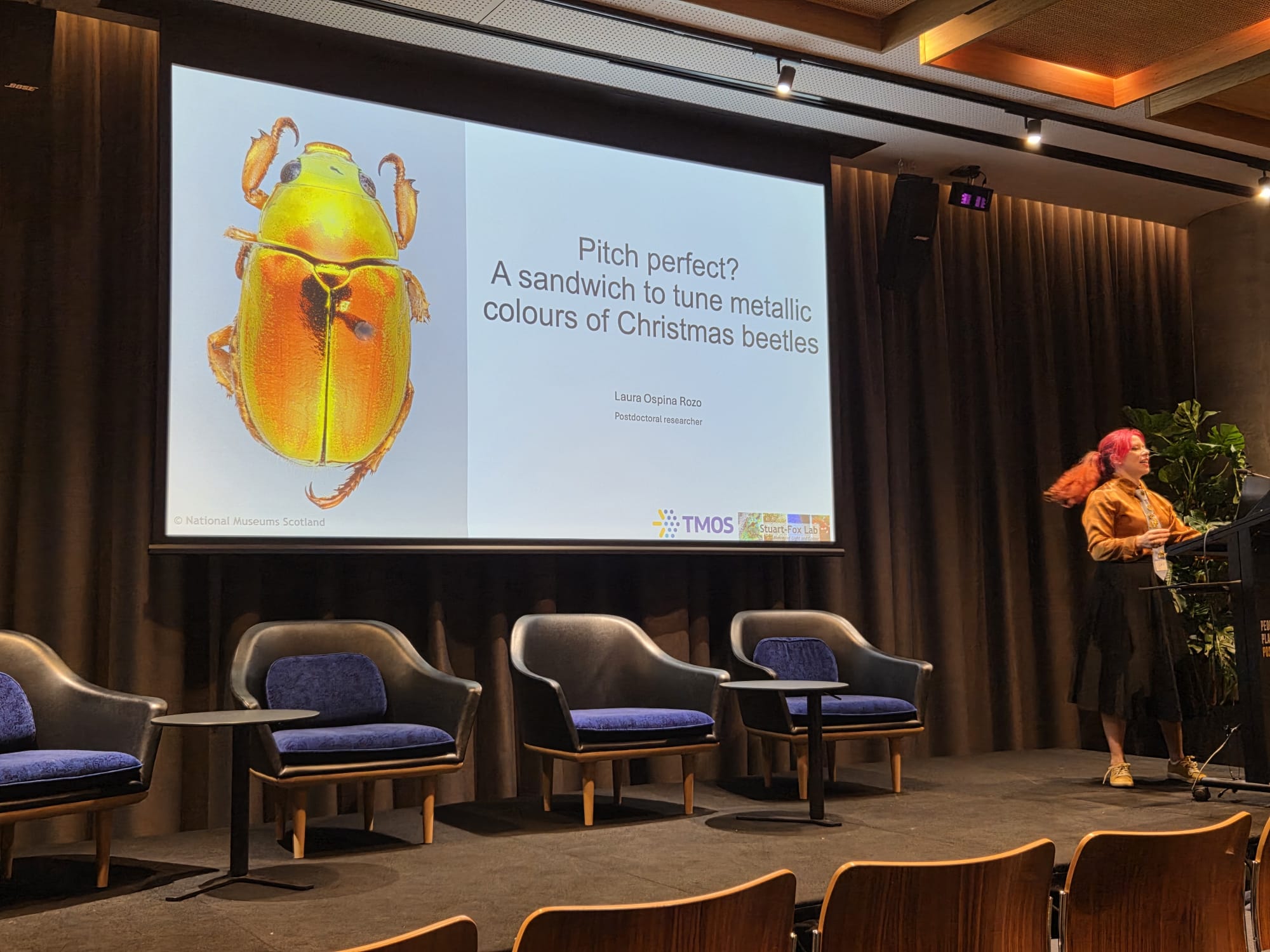
Laura was up first! Dressed in an ochre top and shiny tie emblazoned with insect-themed enamel pins, Laura presented on ‘A pitch-perfect sandwich: tuning metallic colour in Christmas beetles’. Despite speaking to an audience of mostly physics-adverse biologists, she very successfully managed to capture our attention and teach us about the complex slinky structures that help tune the striking metallic colouration of Christmas beetles. She used a cleverly explained “sandwich” analogy along with plenty of clipart of bread and cheese – the pitch of the “cheese”, representing the middle part of the slinky structure, helps determine the hue of the beetle cuticle, while the “bread”, representing the outer layers of the slinky, amplifies the light waves to help increase the intensity.
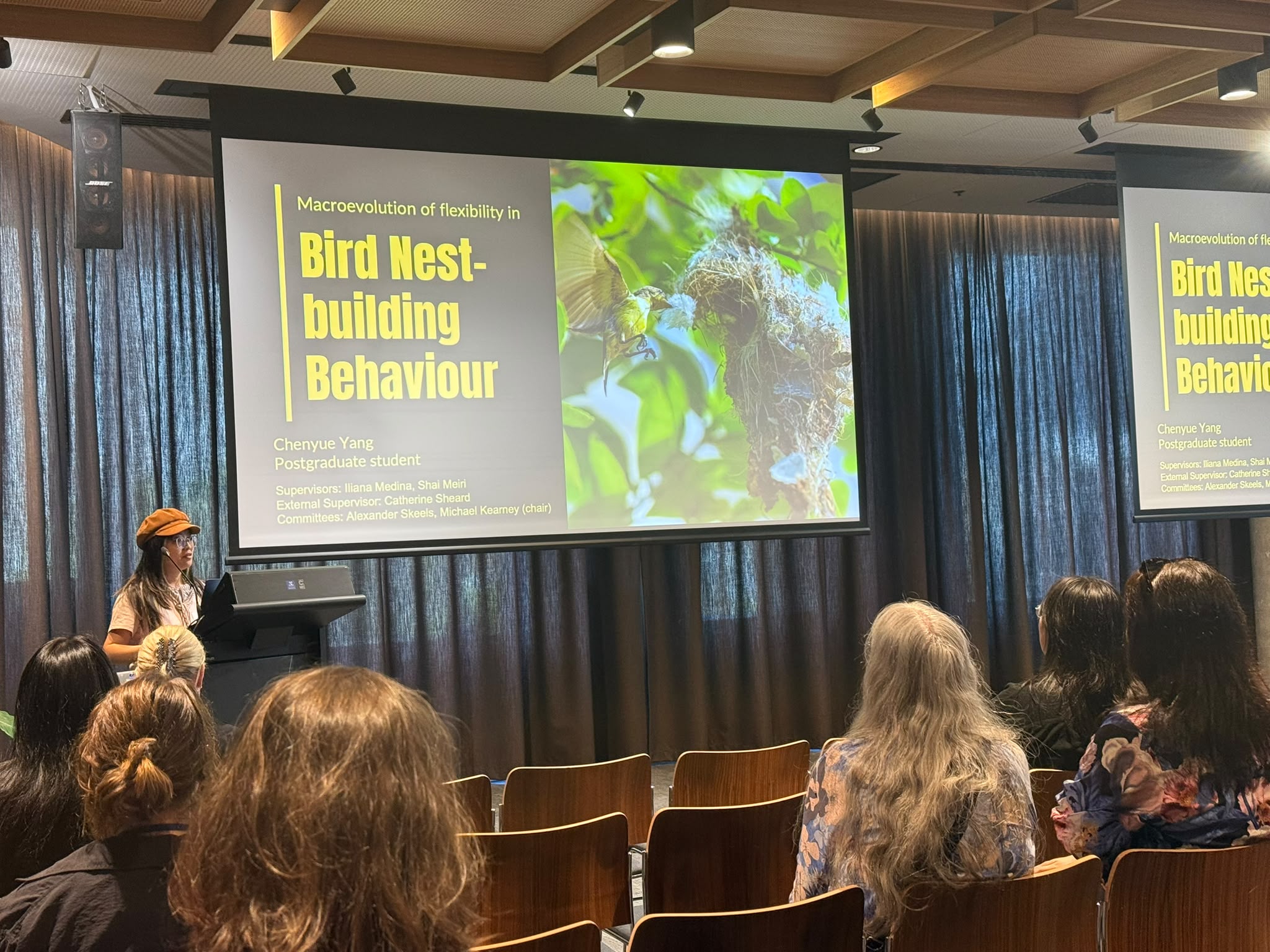
Later in the day, Chenyue presented her PhD research on ‘Macroevolution of flexibility in bird nest-building behaviour’ for the first time! Using an extensive avian dataset, Chenyue estimated rates of evolution in nest structure and nest location. With the help of several accompanying bird nest photos, she contrasted examples of labile families such as Tyrannidae (tyrant flycatchers) which built varying combinations of enclosed/cup/platform nests, against more constrained families like Strigidae (owls) which mostly occupy existing cavities. Chenyue emphasised that lineages with high lability in structures also showed high lability in locations.
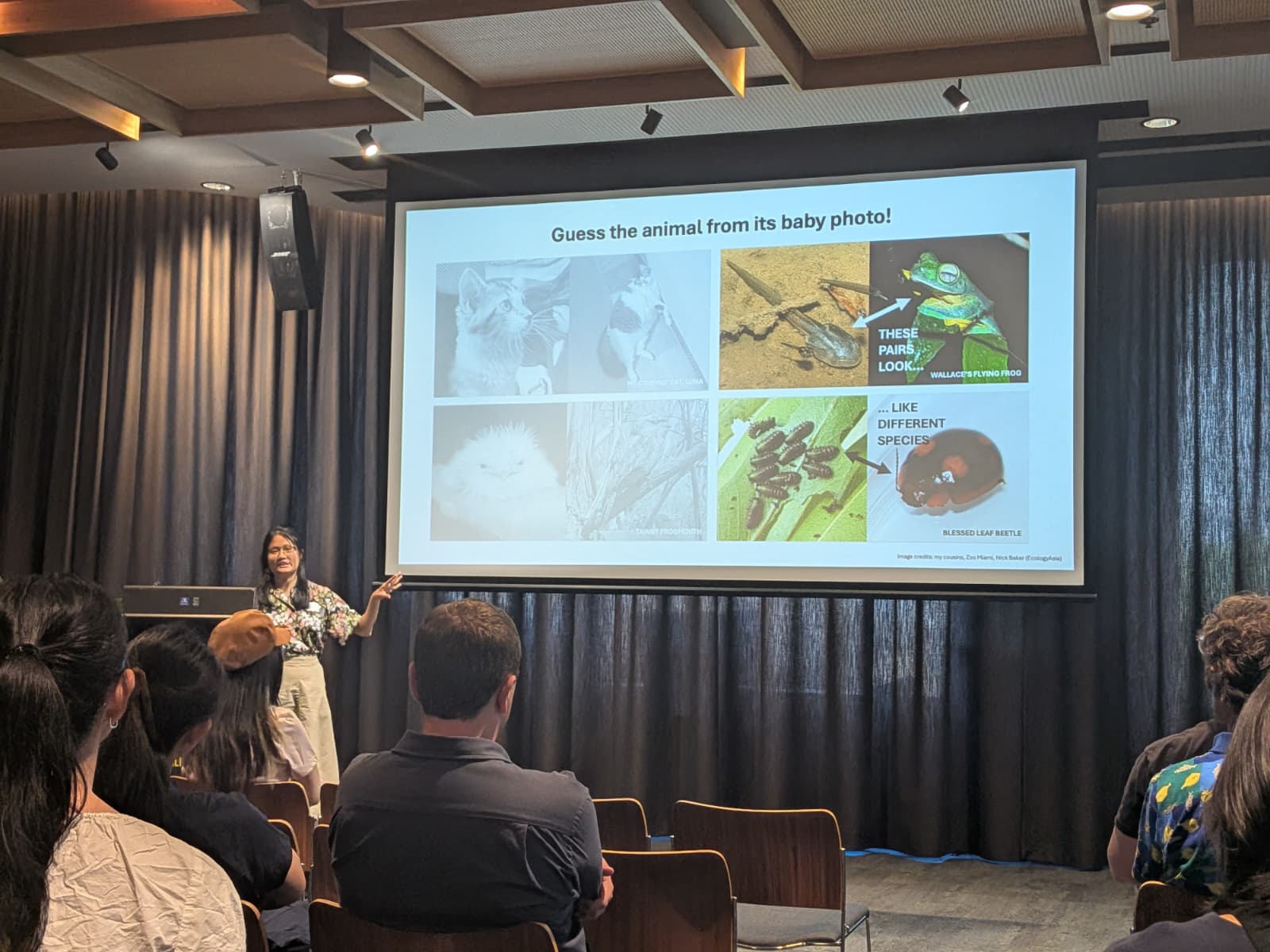
Alexis went next, sharing about her PhD project on the ‘Carryover costs of larval defences in a warningly coloured native leaf beetle’. She wanted to investigate how predation pressure and expressed juvenile defences can cross the metamorphic boundary and impact adult traits including adult sizes and conspicuousness in the blessed leaf beetle Paropsisterna beata. After many months of beetle breeding and simulating predator attacks, Alexis found that beetle larvae that underwent more attacks and hence used higher frequencies of defences emerged with shorter body lengths (indicating a physiological cost) and with slightly higher chromatic contrast between contrasting colours on elytra (they look more conspicuous). In other words: What doesn’t kill you makes you stronger smaller and a little bit brighter!
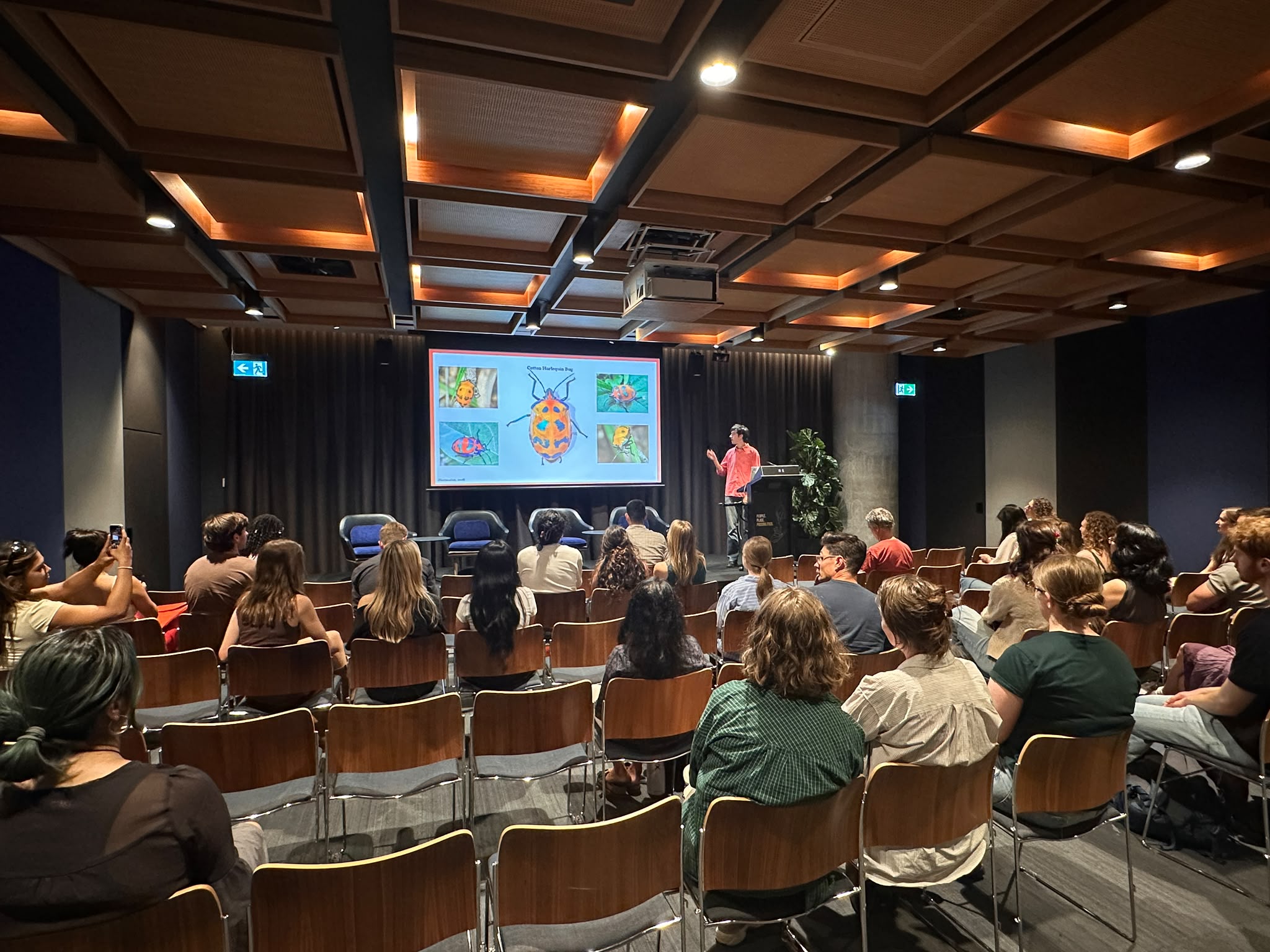
After a delicious hearty lunch, Iain delivered an amazing presentation on his honour’s thesis with the lab: ‘Feeling blue and under the weather: is humidity turning jewel bugs blue?’. The cotton harlequin bug Tectocoris diophthalmus varies in its contrasting blue/orange colouration throughout its range, and so Iain was interested in understanding what environmental conditions influence adult phenotypes. Over months of bug collecting in New South Wales and breeding bugs in the lab, Iain discovered that the perfect recipe for cooking up a super shiny blue bug in the lab needed just two ingredients: cooler temperatures which led to larger iridescent patches, and dry air that resulted in bluer bugs.
To end off a long day of science talks, the committee organised a meaningful panel on ‘Incorporating Country and Indigenous Engagement in Daily Research Practice’. The panellists emphasised the value of knowledge passed through generations of First Nations People, and how researchers can respectfully reach out to communities to involve them in conversations and research.
And finally, it was time to announce the best presentations for the day… *drumroll*… Congratulations and a job well done to Iain for delivering the 3rd best talk! With our hearts full of pride and heads full of cross-disciplinary science, we proceeded to the Clyde Hotel for nibbles and networking.
Written by Alexis Goh and Kei-Lin Ooi, PhD students


You must be logged in to post a comment.