
Beetling at the synchrotron
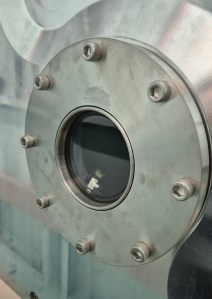
Mission briefing
Crew:
Laura Ospina Rozo – Chief Beetle Navigator
Jianbo Xu – X-ray Cartographer & Pattern Diviner
Katrina Rankin – Experimental Quartermaster (samples aligned, crew organised)
Devi Stuart-Fox – Specimen Machinist
Pablo Mota Santiago (our beam scientist) – Beamline Sorcerer & Night Watch Officer
Mission: Investigating the development of beetle cuticle structures
Location: Australian Synchrotron – SAXS/WAXS
Time available: 121 hours
Samples: Tiny, irreplaceable, and several weeks in the making
Chances everything goes exactly according to plan: [?]
122 hours remaining – Welcome to the beamline
Our first day at the synchrotron began with an important lesson: how to make absolutely sure nobody is left inside the machine.
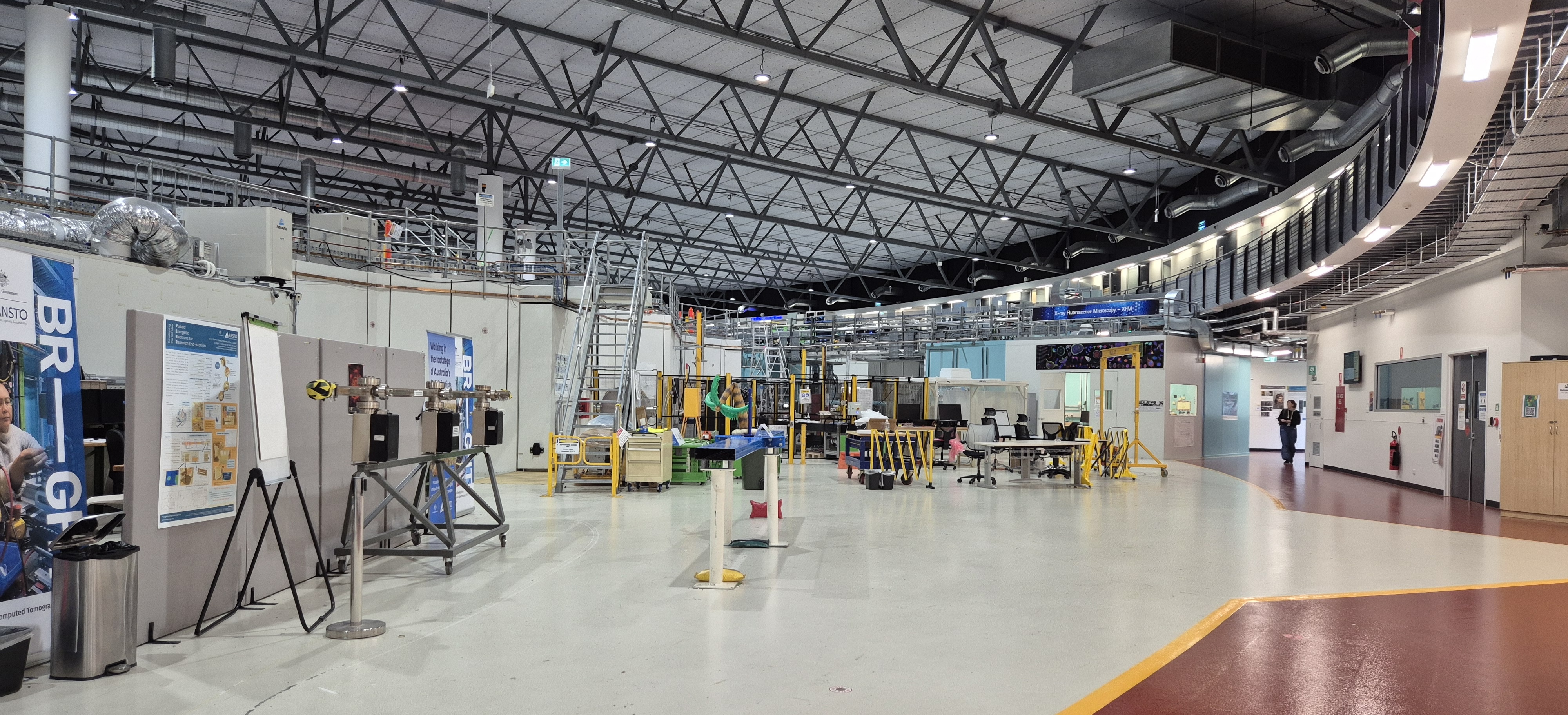
The beamline looks like a scientific bunker: a huge machine surrounded by cameras, computers and mysterious components. Before the X-ray beam can operate, you perform a safety search. Push a button. A loud alarm starts. Check that nobody is crawling under the machine, hiding behind something, or distractedly thinking about the nebulae. Push another button. Get out. Close the doors. The light turns red.
We had completed the online training, but actually doing it felt wonderfully surreal: some steampunk vibes, some intrusive thoughts, and an alarm rushing you to leave. Add a talking cat and it could have been April and the Extraordinary World.
We had waited almost a year for this beam time. Now we had 5 days, 2 hours and 30 minutes to make the experiment work. We were well prepared. We had studied the technique, completed training and already run a pilot. But we also knew our experiment was pushing the limits of what the beamline could resolve, and our samples took weeks to prepare. There were no easy replacements if something went wrong.
The clock had started.
~119 hours remaining — What exactly are we doing?
As electrons race around the synchrotron at almost the speed of light, magnets force them to change direction, producing extraordinarily intense beams of light. Concentrated into such a tiny beam, this light can be millions of times brighter than sunlight. Our set up measured how X-rays scatter when they pass through a sample.
The result looks deceptively simple: patterns of spots and rings. But hidden inside them is information about the dimensions, composition and organisation of structures within the sample. The whole time I kept thinking: how did humans invent this?
I grew up hearing stories about scientists doing extraordinary experiments somewhere far away in the world. Never in my wildest dreams did I imagine that one day I would be using a modern descendant of the X-ray diffraction technique Rosalind Franklin used to help reveal the structure of DNA. Fun fact: her famous Photograph 51 required 62 hours of X-ray exposure to produce a single image.
More than 70 years later, we were watching scattering patterns appear on a screen in real time and wondering how we are the scientists going to decode them. It was both amazing and terrifying.
~115 hours remaining — Seven screens and a very small beetle
Learning to operate the beamline involved about seven screens. But overall, this part was very straight forward. Just set the sample and let the beam do its magic.
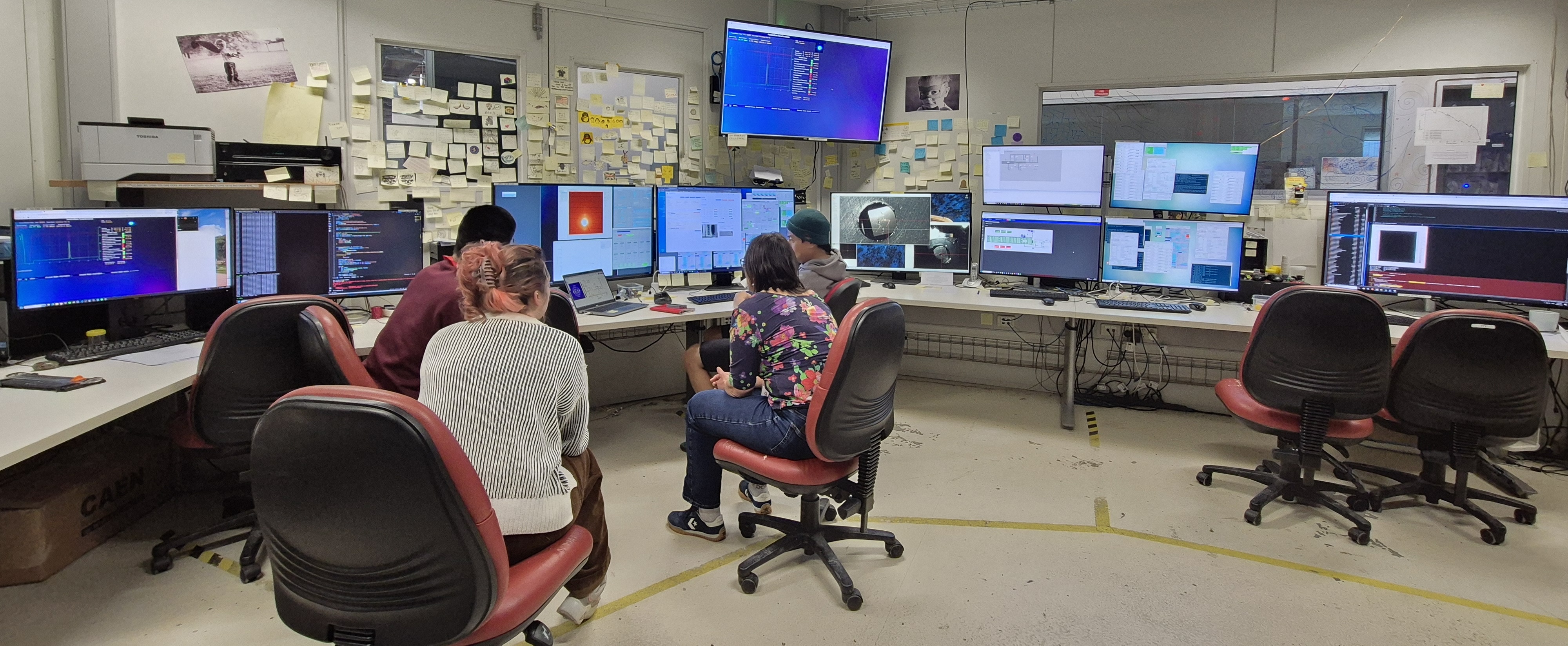 My favourite part, however, was the walls. Despite looking like a futuristic bunker, the operation rooms were covered in jokes, drawings, thank-you notes, footy team logos and just humanness. If I ever pursue my not-so-secret ambition of studying philosophy, I want to investigate whether silly puns are an adaptation for human survival.
Then came our tiny problem. Take the thickness of a sheet of paper and divide it by twenty. That gives you roughly 5 micrometres, i.e. the size of some of the structures we wanted to measure. Now imagine trying to hit just that tiny region from the side with a rectangular X-ray beam. The beam could be focused to an impressive 3 micrometres high, but it was still 25 micrometres wide. Unless we aligned it precisely with the structure, we would measure several things at once, mixing the signal we wanted with everything around it.
~73 hours remaining — We were crushing it
Tuesday and Wednesday felt productive. We were convinced we were simply flying through. By Thursday, we had developed a much better alignment method and learnt how to process the data in real time with Python. This was excellent! Except that it showed us everything we had been doing wrong.
This is normal in science. We imagine progress as a linear path: plan, experiment, answer. In reality, the beginning often feels like walking into a dark room looking for the light switch. You feel around, bump into things and slowly learn where the walls are. Eventually, you find the switch. Thursday night, deep inhale, start again.
~33 hours remaining — One beetle down
By Friday night, we had completed all the data for one of our beetle species. Half the team could process data while the other half aligned samples, checking everything as we went. We had become dutiful, well-oiled little cogs in the synchrotron machine.
Then came species two. It needed a different approach, and I found myself running between the beamline and a light microscope, trying to identify micro landmarks that would tell us where to position the X-rays.
There was something wonderfully absurd about it: the giant particle accelerator was working perfectly. We just needed to figure out where to point it.
~21 hours remaining — Where are the structures?
By Saturday midday, we still couldn’t find convincing traces of the structures we needed. The tension was mounting…
~13 hours remaining — Wait. There they are!
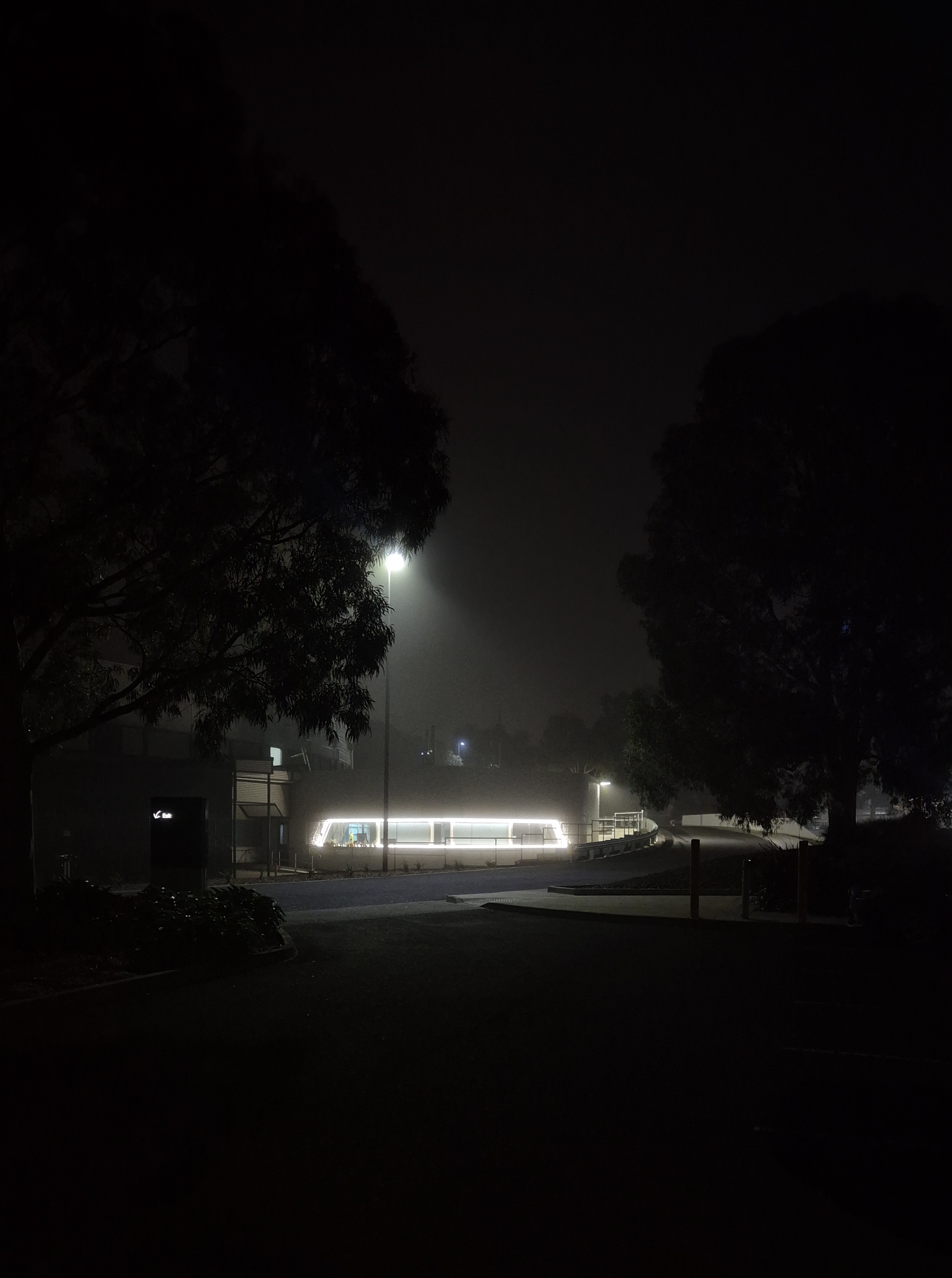
Around 6 pm on Saturday, we thought we had found a signature of the nanostructures. Suddenly, nobody was tired and we kept going through the night.
The synchrotron is strangely alive at 3 am. People talk, share food and wander between experiments. We met researchers from geology, medicine, molecular biology, arts and other fields, all gathered around glowing screens trying to extract secrets from matter with accelerated electrons. It felt a little like a scientific séance.
The experience also confirmed two of my core beliefs:
- Good sample preparation protocol matters as much as fancy equipment
- I should not drink caffeinated soft drinks. I am Colombian; coffee does remarkably nothing to me. Energy drinks, though, give me the zoomies.
0 hours remaining
We finished! Oh my word, we actually managed it. Phase one of the mission: accomplished.
The synchrotron delivered. We slayed. And our Beamline Sorcerer (Pablo) survived the Herculean task of speed-teaching us, troubleshooting our experiment and answering calls at ungodly hours. Legend!
We came home with beautiful scattering patterns, an enormous amount of data a mild case of jet lag, and the very satisfying feeling that we had pulled it off.
The machine has spoken. Now we must put our brains to work and decode those patterns. Want to know how the mission ends? Stay tuned for the paper.
Post by Laura Ospina Rozo, Postdoctoral Fellow, Chief Beetle Navigator


You must be logged in to post a comment.